
Gutenberg Technologies
Advanced user TESTING
Gutenberg Technologies (GT) is a company that offers a content management platform designed for creating and distributing educational and professional content. Their platform is used by publishers and corporations to efficiently produce learning materials for both print and digital formats from a single workflow. Using AI-powered solutions, GT helps transform static documents, like PDFs, into interactive, multi-format courses. Our client’s goal is to gain an understanding of how people perceive the AI edit tool and also evaluate the “Generate questions and learning activities.”
-
This was a user research project focused on the usability and discoverability of the product’s AI content editing and content generation tools.
-
Gutenberg Technologies
-
The team was comprised of 4 User Researchers, all graduate students of Pratt Institute.
-
UX Researcher
-
Client briefing and goal alignment
Current AI tools analysis and testing
Recruiting test users
8 Eye-tracking studies with Retrospective Think-Alouds.
Analyzing test results and consolidating findings
Designing and prototyping improvisations and recommendations
OBJECTIVEs
Our primary goal is to evaluate the usability and overall user experience of the AI Content Management System (CMS), with a specific focus on the "Edit with AI" feature. We aim to ensure the platform and its new AI capabilities are intuitive, accessible, and powerful for all users, regardless of their prior experience with AI.

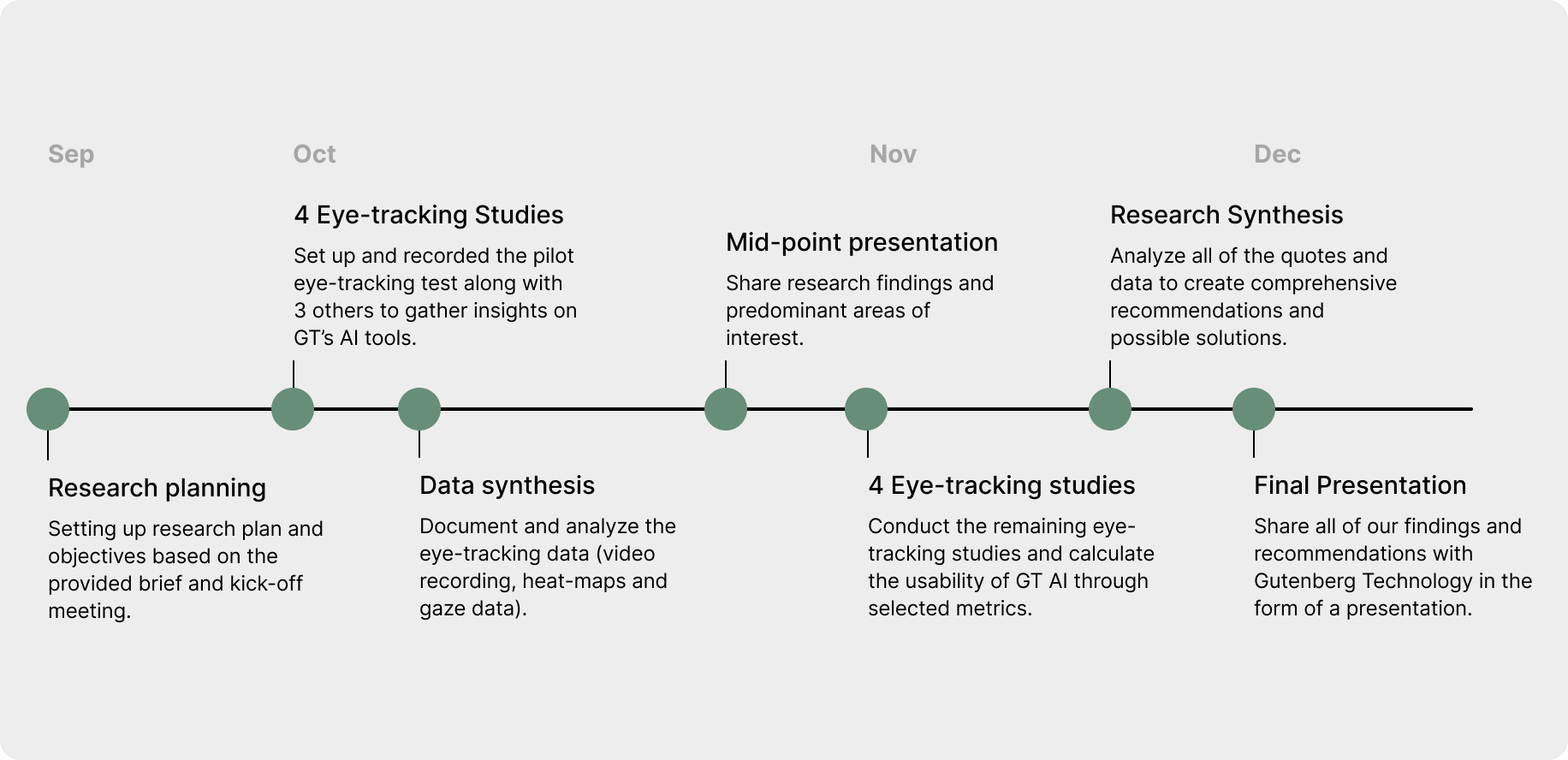
PROJECT JOURNEY
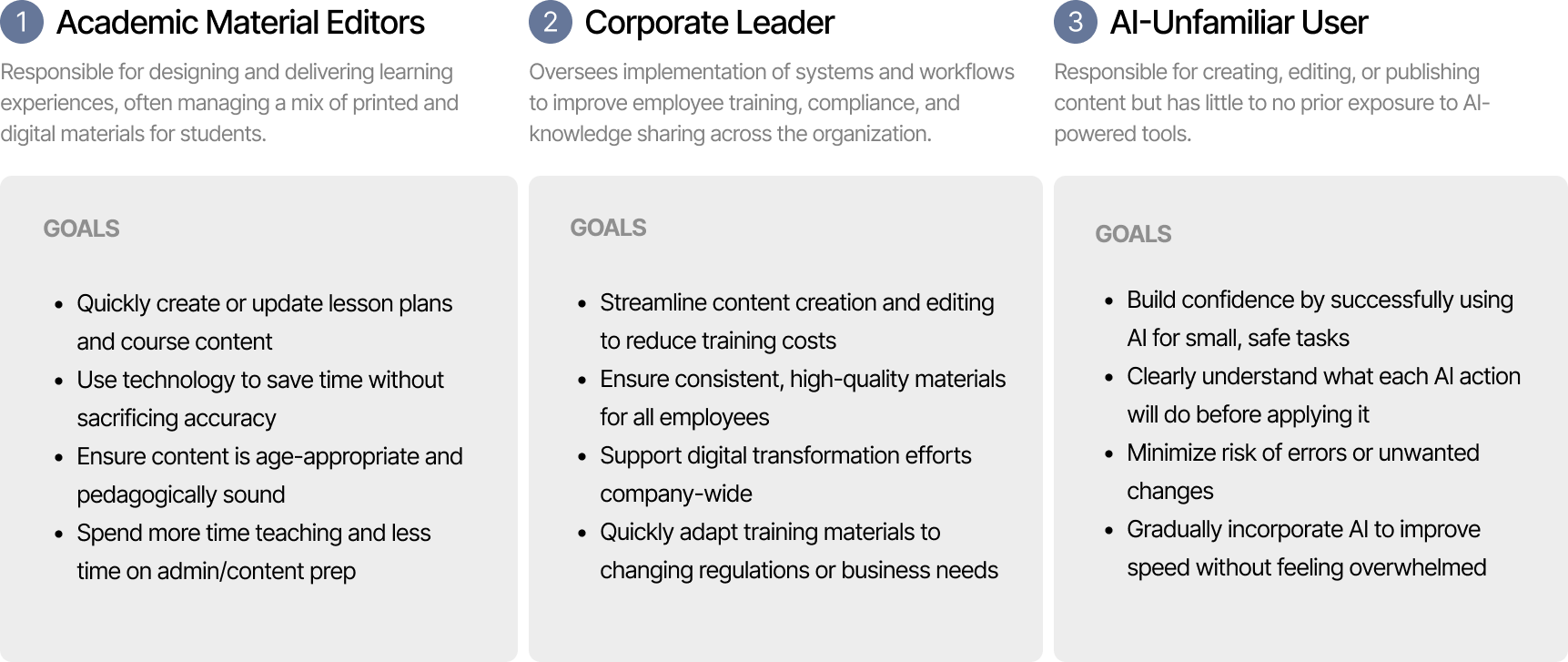
user group
For this study, eight participants were recruited that fell within one or more of the following brackets:
HYPOTHESIS




research methods

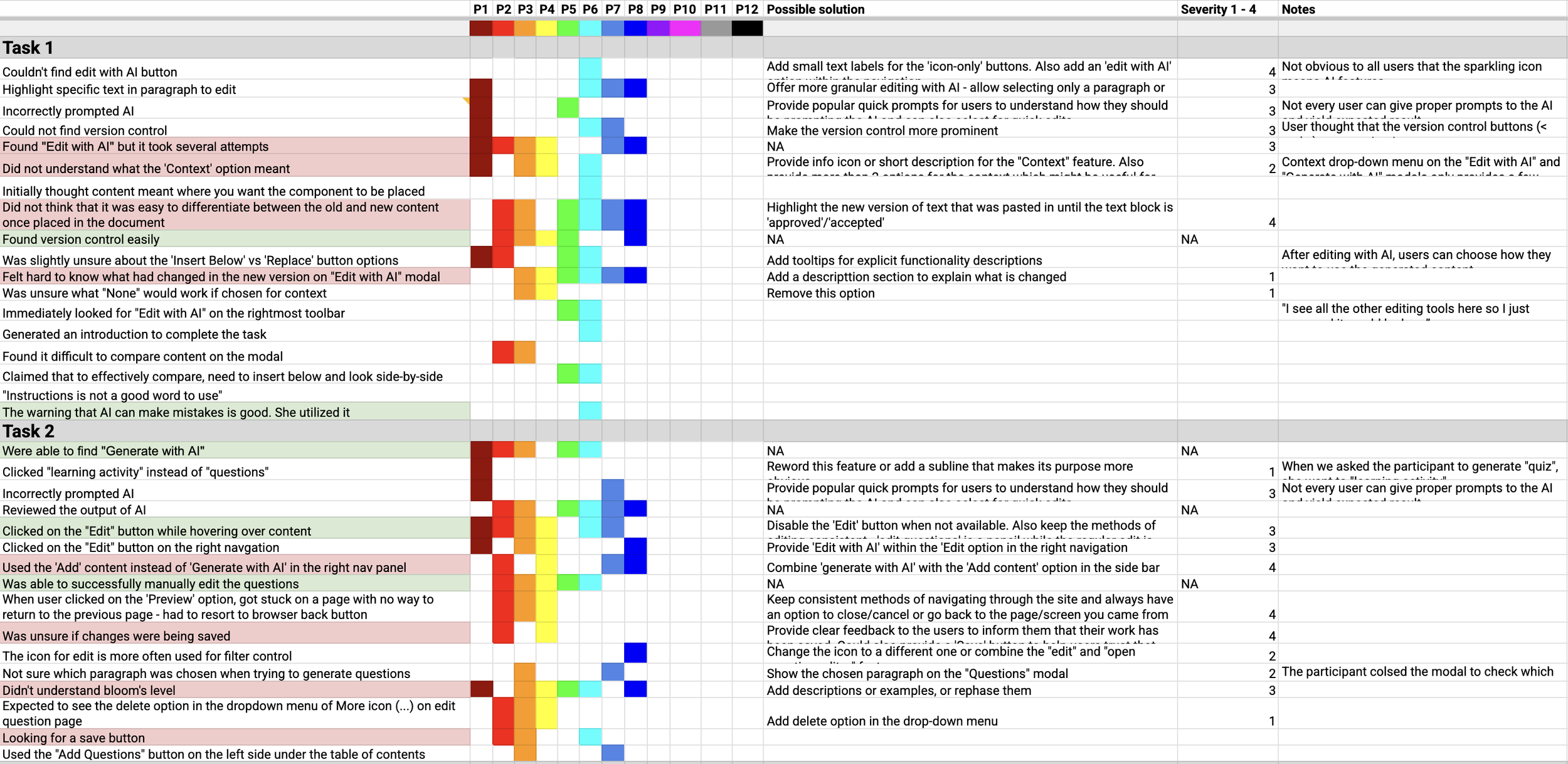
FINDINGS & recommendations

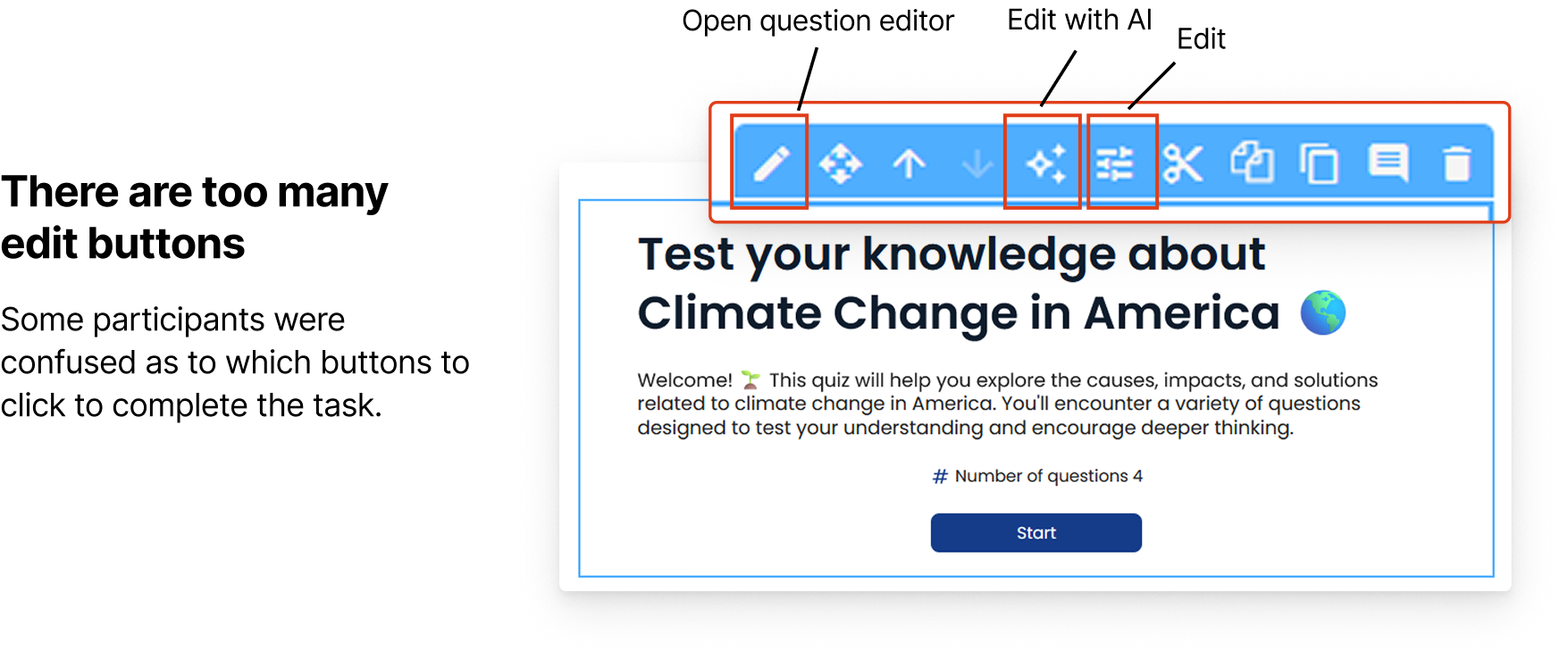
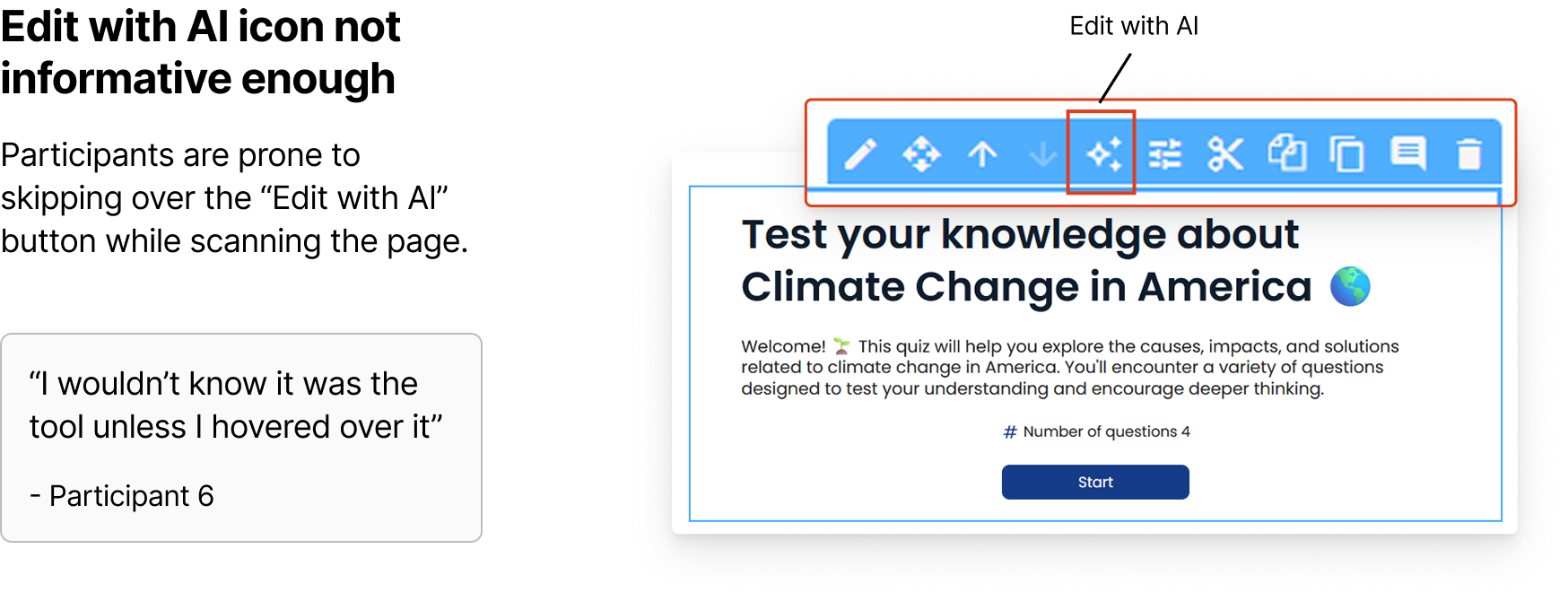
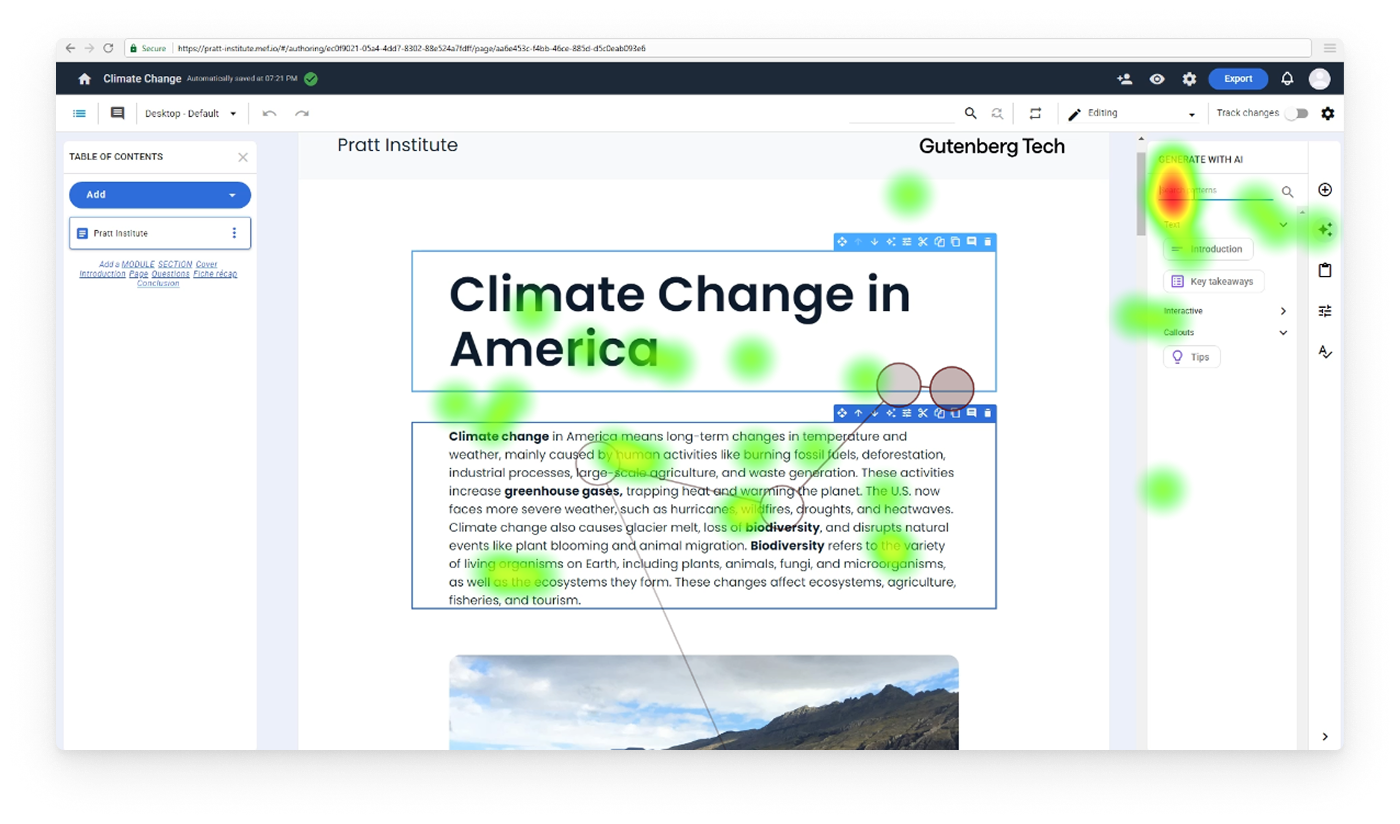
While everyone was able to find the “Edit with AI” button, it took a long time, indicating low discoverability.

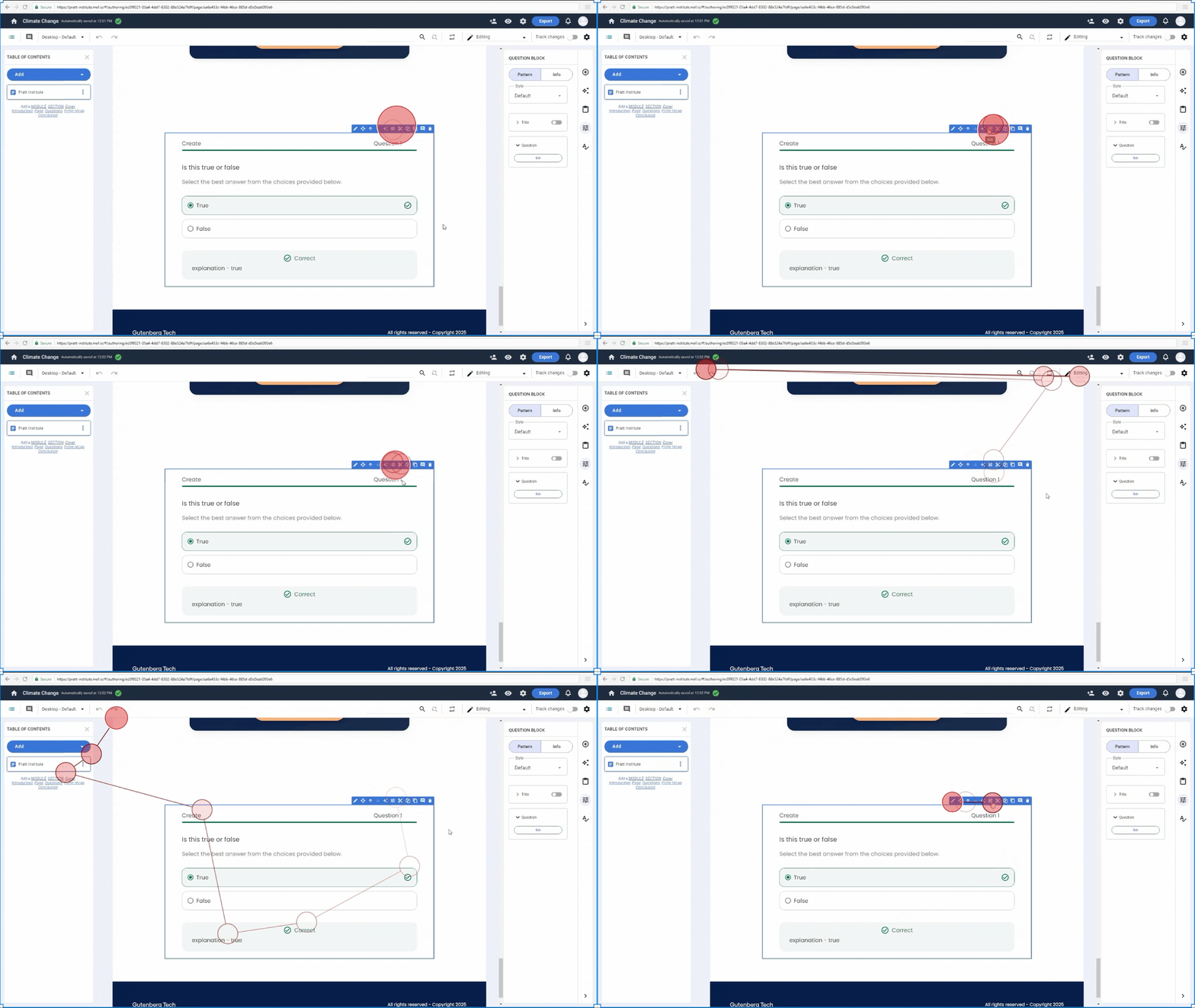
Participant 1 struggling to edit the quiz. She clicked through several different options to find the one she needed.

sECONDARY RECOMMENDATIONS

CONCLUSION
Williams College is a small teaching college located in Massachusetts with an upcoming expansion on the horizon for its on-campus art museum. The institution hoped to get a better understanding of whether its museum website was truly beneficial; through collaboration with Williams College Museum of Art, a team at Pratt Institute led a usability test with a group of seven Williams College students and one Pratt student. Conducted remotely, the undergraduate and graduate school participants were moderated using the WCMA site to find specific items and through open-ended instruction. The primary goal of the test was to learn how users currently utilize the site and how WCMA can potentially streamline its content discoverability and exploration paths in the future. To fully understand the user experience of site visitors, the cohort was divided evenly to review the website in both desktop and mobile versions, thereby identifying its range of capabilities.
The test revealed several usability challenges that, if addressed, will greatly enhance site experience for users. Despite its eye-catching visual format, issues remain when attempting to locate specific information about WCMA and its wealth of on-site resources. To provide solutions, this report from Pratt presents design and contextual recommendations primarily focused around the following areas of opportunity:


Implementing these suggestions will help to create a more ideal experience when using WCMA’s website, making museum programming and resources more impactful overall. Improving navigation and reorganizing the content architecture of the site will not only better promote existing programming and events but address the museum’s ultimate goal of enhancing content discoverability. As a result, Williams College students and the greater community will feel encouraged to engage further and spread the museum’s mission.